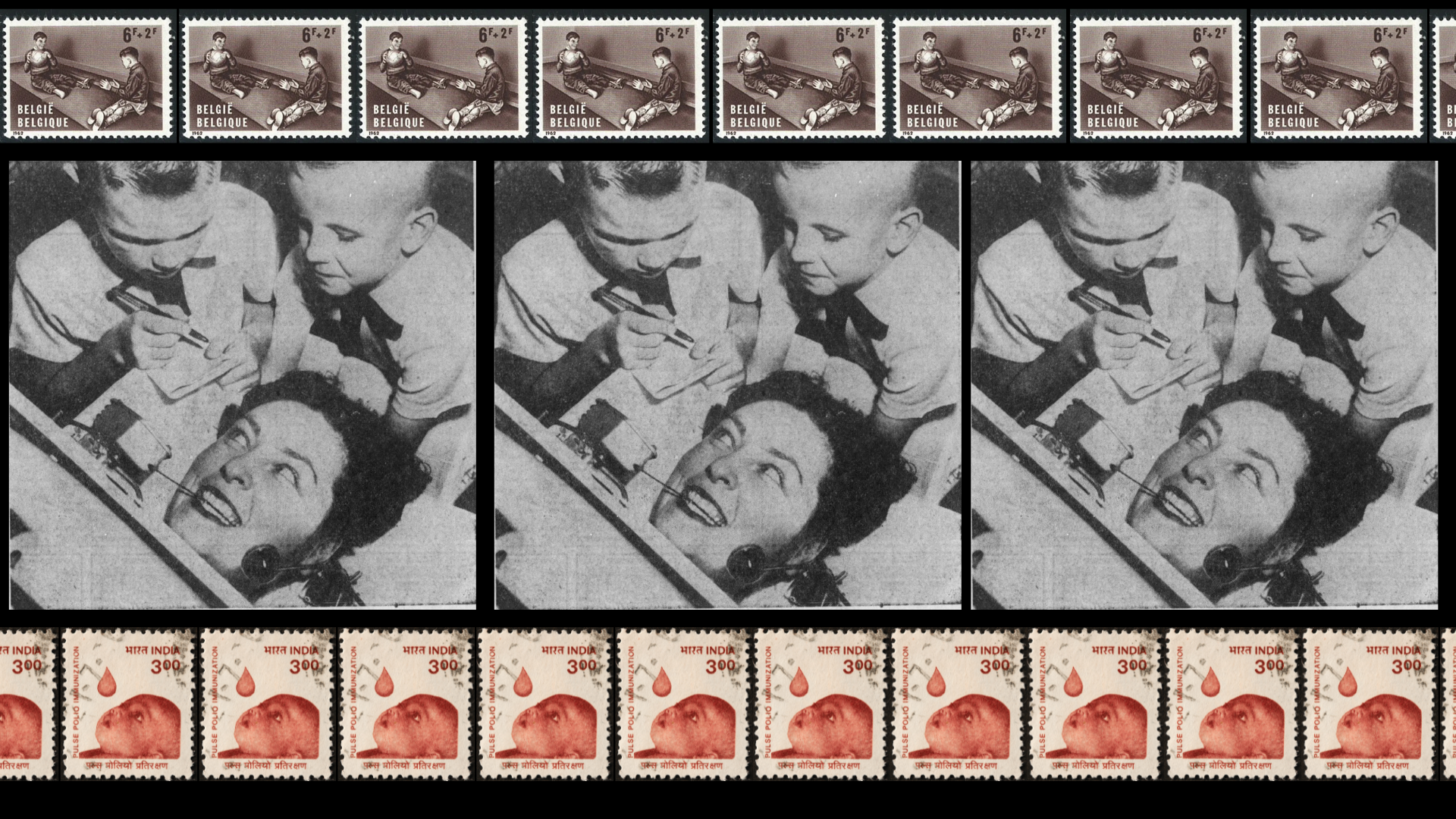
In July 1959, furious healthcare professionals warned the American public that polio was not yet licked. Far from it. That summer, cases of polio that left victims – often children – paralysed for life jumped upwards. Complacent parents were accused of not having put their kids through the full three shot program required to vaccinate effectively – while some had turned their backs on the vaccine. Either because they thought the disease was old news or they had heard unfounded gossip about the dangers of the jab.
As the newspaper article below warns, failure to get the three shots could leave a child in a wheelchair for life. US Surgeon General Leroy Burney told parents in 1959 that denying their offspring a vaccination could leave them unable to walk. Did they really want to take that risk?

In 1952, courageous mum Mary Ann Huff hit the headlines as she tried to continue normal family life, bringing up her sons while encased in a life support machine. In her late twenties, Mrs Huff had been stricken with polio and paralysed. At the time it was said that Americans feared two things above all else: nuclear war and polio. Indeed, 1952 turned out to be the deadliest year for polio in American history. Cases were a third higher in New York than during the First World War.
Mrs Huff is pictured below giving her sons their daily chores – while maintaining a smile throughout. The object in her mouth is a device that allowed her to operate a specially constructed telephone. Incredibly, Mary Ann survived until 1983 but never recovered from the effects of polio.

DISCOVER: Who were the Green Children of Wulpet?
By the mid-1950s, US physician Jonas Salk had developed a vaccine that despite a shaky start, dramatically reduced incidences of polio. By 1961, there were only 161 cases in the United States. And by the end of the 1970s, newspapers were reporting with alarm that despite the disappearance of polio in the US and Europe, it was still rampant in Mexico, Latin America, Africa, and the Indian sub-continent.
American hospitals began putting their respirators – the gigantic iron lungs into which people were placed – into storage. Sadly they occasionally had to come back out again when vaccination rates slackened and incidences of polio rose once more, as happened in 1960 as the picture story below relates.

Among Americans, the 1950s polio epidemics had long-term effects. Victims in the 1980s experienced what was termed ‘post-polio’ syndrome where immune systems weakened by age succumbed to polio-like symptoms. Formerly unaffected muscles showed new signs of weakness accompanied by joint pain and breathing difficulties.
Polio vaccine misinformation
And yet here we are in the 21st century with renewed concern about the rate of vaccination and social media spreading nonsense about the supposed risks involved. The real danger is that parents do not protect their children from a disease that would dearly love to make a comeback from its last two strongholds: Pakistan and Afghanistan.
Older Boomers should remember how polio stalked the United States and Europe in the 1950s and 1960s bringing death and paralysis to millions of children – let alone what it was doing in the developing world. Yet today, there are Boomer politicians and pundits spreading vaccine scepticism. They really need to stop.