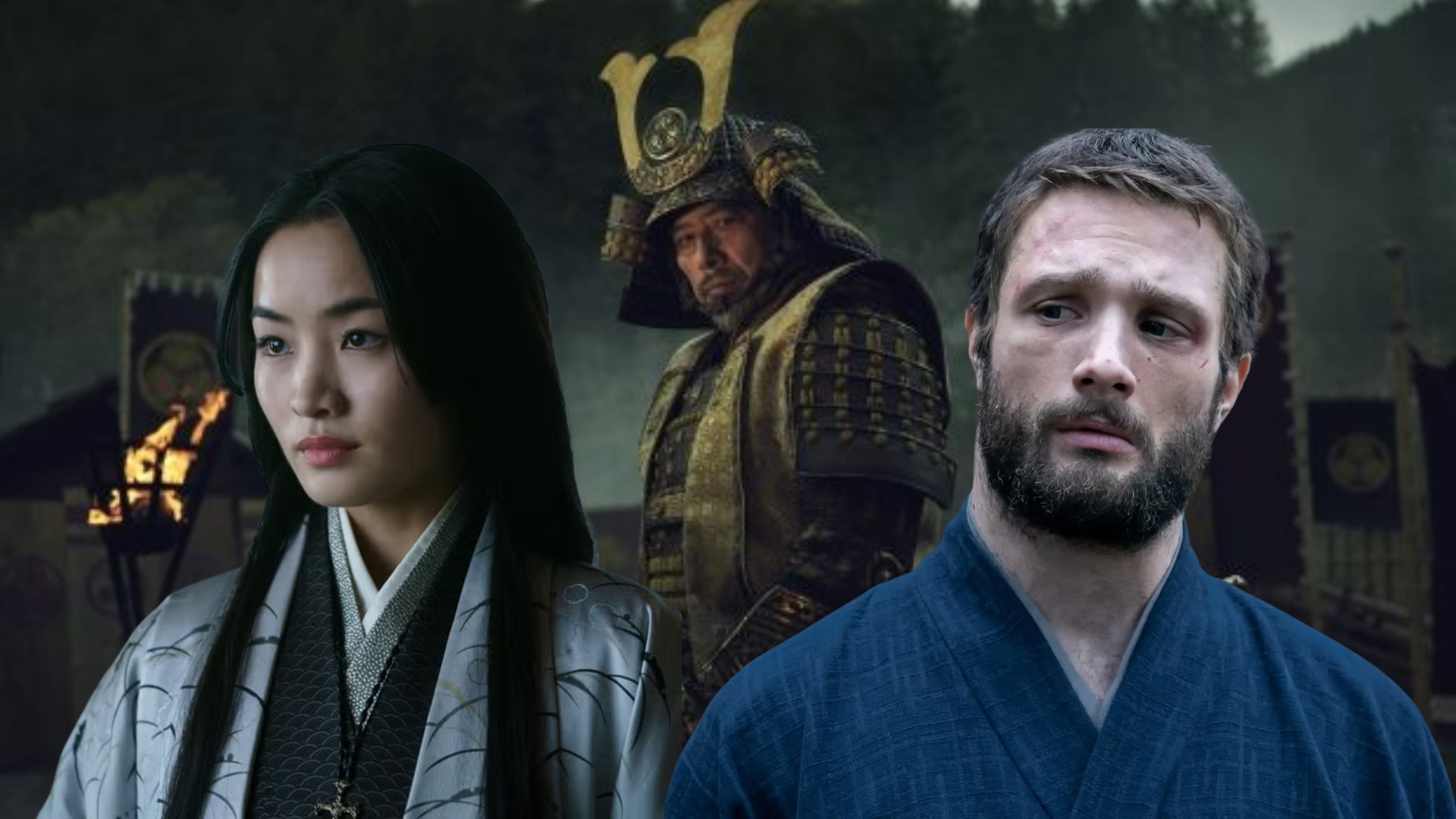
Shogun has been a hugely popular streamed series on FX and Hulu telling the story of an English navigator stranded in early 17th century Japan – caught up in violent conflicts between rival warlords – but eventually finding a way to become part of that strange society. But is it truth or fiction when it comes to Japanese history?
The series is based on the 1975 novel by James Clavell though with some interesting changes of emphasis in the adaptation that speak to our own worldview today and modern sensitivities. But how much of the story is based on fact? Well, a surprising amount as it turns out.
John Blackthorne – English navigator in Japan
The story begins with an English ship’s pilot whose vessel, the Erasmus, washes ashore in the Japanese fishing village of Ajiro. The ship is Dutch and it’s the aim of both the Netherlands and England to muscle in on the trade monopoly that the Portuguese have established with the Japanese.
But the voyage to Japan has been fraught. Hunger and disease have ripped through the crew and it’s a ragged, emaciated group of survivors who stagger to shore. The locals are not sure what to make of the new arrivals, suspecting they might be pirates. In the recent adaptation for streaming, they are imprisoned though Clavell had them forced to live with the scum of Japanese society.
Without injecting too many spoilers into this post, one of the Europeans is boiled alive in a particularly graphic scene. It’s a tough watch and illustrates the gulf of understanding between the ship’s crew and the society they have now encountered.
Blackthorne is a talented navigator with immense knowledge of sailing, geography, and maritime warfare – but his talents are not immediately recognised. The Japanese nobles are somewhat distracted with a power struggle between different warlords who sit on a fractious council of regents, following the death of the last ruler.
Among these warlords is one who will create a new Japan – Lord Yoshii Toranaga – and this noble comes to realise that Blackthorne could be useful to him.
Evil Portuguese Jesuits
In both Clavell’s book and the on-screen adaptation, the Portuguese are portrayed as villainous. Being half-Portuguese myself, I did weary at the juxtaposition between the wholesome English Blackthorne and the wicked Iberian priests.
As a useful point of information, Portugal at this time had been conquered by Spain. The Portuguese were able to continue managing their maritime colonies around the world but were under the thumb of the monarchs in Madrid. Both countries were resolutely Roman Catholic with Spain being England’s implacable foe.
This animosity was underscored by England adopting the Protestant faith while Spain remained loyal to the Pope in Rome. Just a few years before the period when Shogun is set, the Spanish Armada had attempted – unsuccessfully – to invade England and reimpose Catholicism at the point of a sword.
The only contact Japan has experienced with Europe is the Portuguese and the Jesuits they have brought with them – who are engaged in actively converting local people to the Catholic faith. Blackthorne – as an English Protestant – views this with horror and explains to Toranaga that Europe is not united behind the pope and his army of Jesuits.
One person the Jesuits have converted to the Catholic faith is Lady Toda Mariko – a Japanese noble woman torn between her religious views and duty to her lord. She acts as an interpreter for Toranaga and develops an affection for Blackthorne. The recent adaptation fleshes out her character more from the book.

DISCOVER: The secret of Japan’s Hidden Christians
The real Shogun versus the fiction
Clavell’s story is based on the real-life unification of Japan by a warlord called Tokugawa Ieyasu, pictured below, on whom Toranaga is based. The Tokugawa clan established a 250-year rule by military strongmen called shoguns. There was still an emperor in Japan, who resided in Kyoto, but he was overshadowed by the shogun ruling from Edo (later renamed Tokyo).

Tokugawa was ruthless but effective. Defenders of the shogunate established in the early years of the 17th century, and only ended in the mid-19th century, claim it ushered in an unprecedented period of peace. Critics counter that it closed Japan off from the rest of the world.
The first Tokugawa shogun didn’t kick out the Portuguese, though he severely restricted their activities. However, the third shogun did expel them. By that time, the spread of Roman Catholicism among the Japanese population and the presence of the Portuguese was seen as inextricably linked. Tokugawa Ieyasu imposed the most draconian punishments on Christians during his reign including crucifixion and being boiled alive.
John Blackthorne is based on William Adams, pictured below, an Englishman shipwrecked in the year 1600. He did become a trusted adviser to Tokugawa, along with this second mate Jan Joosten, and was even made a samurai. Adams was one of the few survivors of a Dutch ship – the Liefde (means ‘love’ in Dutch) – which arrived with a crew on the verge of starvation.

The Liefde was part of a five-ship Dutch fleet aiming to open trade routes in the east for the Netherlands and break the Portuguese monopoly but the voyage across the Pacific was a catastrophe for those involved. Maybe Adams should have known better as a very experienced mariner. He had supplied the English fleet with provisions during the battle against the Spanish Armada and worked for the Barbary Company, a joint venture between Queen Elizabeth I of England and the Sultan of Morocco.
Lady Toda Mariko is based on Hosokawa Gracia, a Christian noble whose importance is arguably underplayed in the fictional story. She was thoroughly embroiled in Tokugawa’s ascent to power and at one point risked being captured by his enemies. Rather than face that humiliation, she chose death. But being a Roman Catholic, Gracia could not commit suicide.
So, a servant agreed to kill her and then take his own life after setting the mansion on fire. You can still visit Gracia’s simple tomb in Kyoto today. Japan’s Roman Catholics revere her as a saint.
Gracia never met Adams so the romantic storyline between Mariko and Blackthorne is wholly fictional. Adams had a wife back in England, but he never saw her again. As with Blackthorne, Adams was browbeaten by the shogun into remaining in Japan. He married a local woman, Oyuki, and had two children: Joseph and Susanna. Adams died far from his native land aged 55 and is buried north of Nagasaki.
The real James Clavell
The author of Shogun, James Clavell, pictured below, was born in 1921 and died in 1994. He was a World War Two veteran captured by the Japanese and sent to a prisoner-of-war camp. These were notoriously cruel and savage prisons where human rights were flouted. But Clavell emerged from this harrowing experience with a deep interest in Japan and what happens when east and west collides.

He also used his experience of wartime internment to write the screenplay for the 1963 classic movie, The Great Escape, starring Steve McQueen and a host of other Hollywood A-listers.
Clavell was clearly no fan of the Jesuits. For him, Blackthorne is a wholesome and rugged individual up against a devious group of Catholic priests pulling the wool over the Japanese. The author was an admirer of the Russian American writer Ayn Rand, pictured below, who espoused a conservative philosophy that heroized the uncompromising individual versus the bureaucratic establishment. Blackthorne is beyond doubt a typical Randian hero.

The first adaptation of Clavell’s book was in the 1980s with the actor Richard Chamberlain playing Blackthorne. His portrayal was along the lines of a classic Hollywood romantic lead, and the story was told very much from his point of view. The Japanese perspective comes through a lot more strongly in the recent adaptation.
In April 2026, I visited Zojo-ji temple in Tokyo where six of the 15 shoguns are buried and took the image below. The mausoleum was severely damaged by the American firebombing of Tokyo in 1945, during the closing stages of World War Two.

NOTE ON THE AUTHOR:
Tony McMahon is an investigative historian often see on TV: https://tony-mcmahon.com/
He is the author of several books on different historical topics including the Knights Templar: https://www.pen-and-sword.co.uk/The-Knights-Templar-Hardback/p/51654
Tony is the co-host of the Talking Templars podcast on YouTube and other channels.