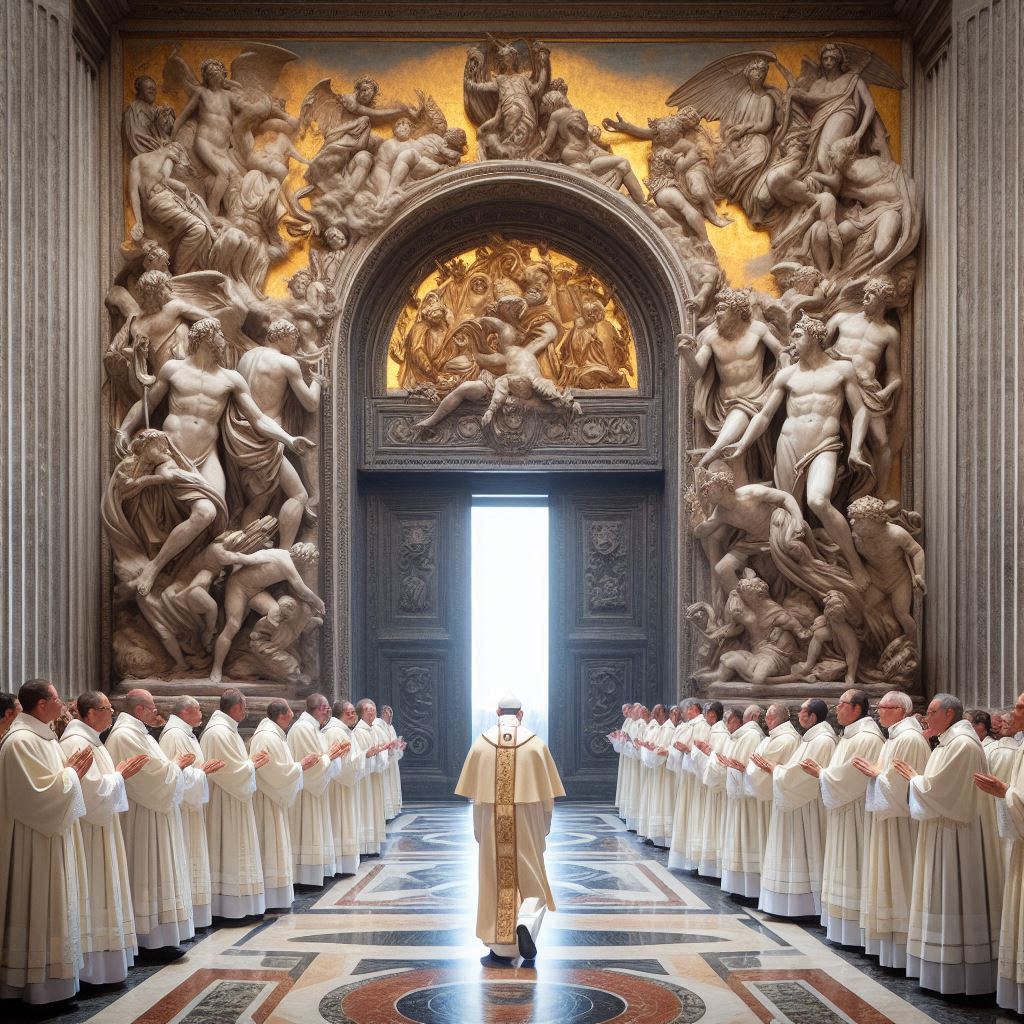
Pope Francis has announced a Jubilee Year for 2025. During this period, an entrance to St Peter’s Basilica in Rome that is usually sealed – the Holy Door – will be opened by the pope. Over thirty five million pilgrims are expected to descend on a city already clogged by tourists – as I saw for myself in a visit this year. It will be an unforgettable experience though a logistical headache for the authorities in Rome and the Holy See.
What is a Jubilee Year?
According to Catholic sources, the word ‘Jubilee’ comes from the Hebrew yobel – which is a ram’s horn blown to commence the equivalent of a jubilee year in the Old Testament (Leviticus 25:9). It was a time when slaves were freed and debts forgiven. The announcement of a papal jubilee year begins with the pope issuing a legal document known as a ‘bull’, in which the purpose of the jubilee year is outlined. In other words, what pilgrims are expected to be thinking and praying during that period.
Jubilee years can also be held in particular locations – though of lesser importance to the main event in Rome. So, for example, in 1956 Pope Pius XII authorised a jubilee year to be declared in Lourdes in 1959 to celebrate the centenary of the apparitions of the Virgin Mary to Bernadette.
The main attraction of the Jubilee Years from the Middle Ages to modern times has been the granting of ‘indulgences’ by the Pope. This is a forgiveness of sin that wipes years off your time in purgatory – suspended between heaven and hell after death. So, you can enter eternal paradise that much quicker by going on pilgrimage to Rome during a Jubilee Year. As an added bonus, you can also pray to have time deleted for dead relatives currently in purgatory – who clearly didn’t pray enough in life.
DISCOVER: Pius XII – the Pope who exploded!
1300 – the first Jubilee Year
Pope Boniface VIII was the first pontiff to declare a Jubilee Year in the Roman Catholic church. It was held in the year 1300 and intended to be repeated every hundred years. But that was soon changed to every fifty years. And then every twenty five years. In fact, jubilee years have been held at erratic time intervals for various reasons. In recent times, special jubilee years have taken place in 1933, 1983, 1987, 2013 and 2016.
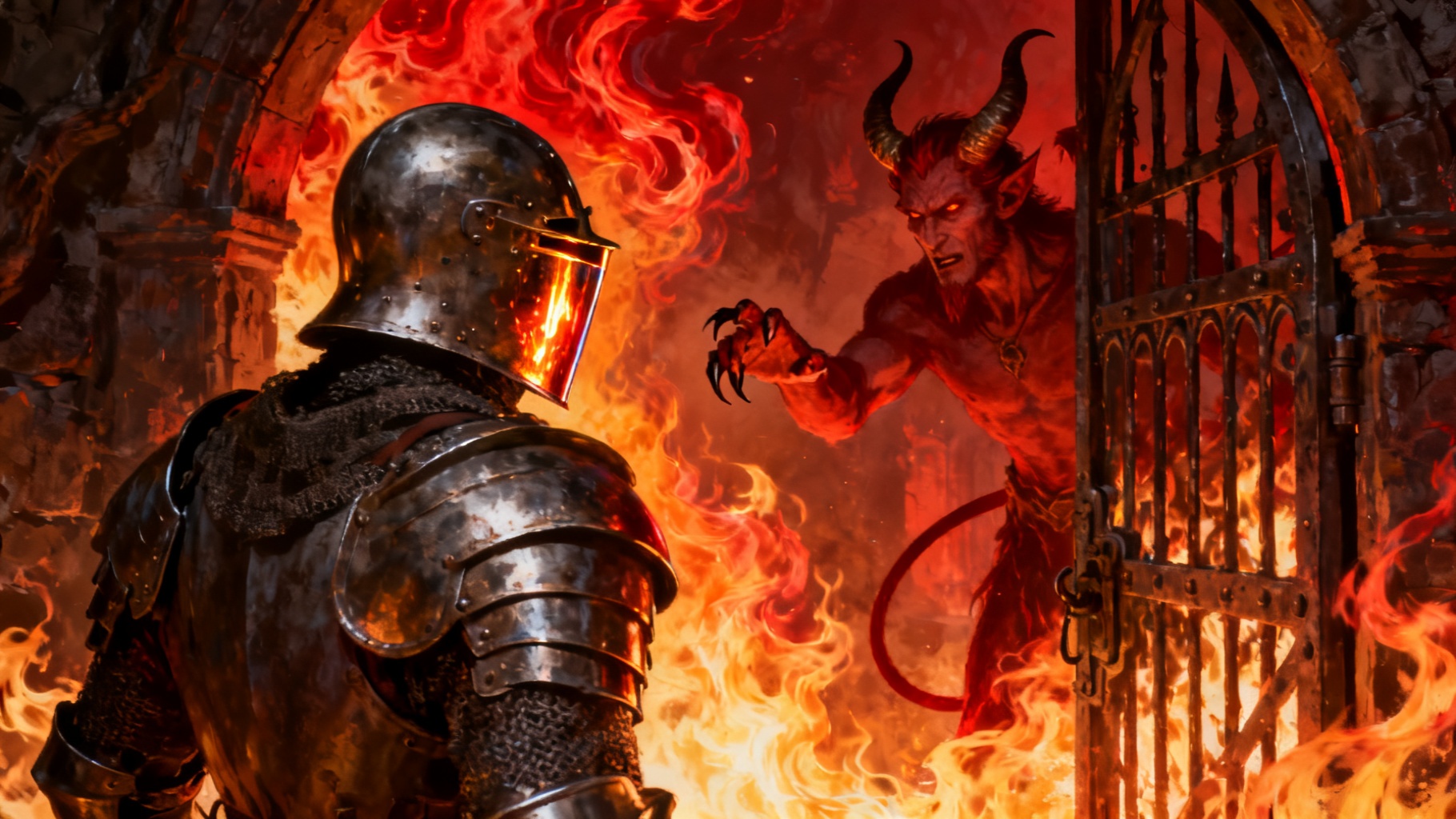
Boniface was one of the most controversial figures to sit on the throne of Saint Peter. The poet Dante despised him so much that he placed Boniface in one of the lowest rungs of hell in his famous work, The Divine Comedy. This pope was involved in a long row with the king of France over taxes levied on the church that led to a group of soldiers, led by the king’s chief minister, arriving at the papal palace to give Boniface a beating. He died several weeks later.
During his pontificate, Boniface tried to exert papal authority over the monarchs of Europe who were increasingly resisting the overarching power of Rome. A hundred years before, a pope’s word was final. But now, kings and princes were essentially telling the pope to get lost. So, the Jubilee Year was as much about reasserting church dominance in medieval politics as it was about attracting pilgrims and raising funds. It’s been estimated that something like 200,000 pilgrims came to Rome that year – which in medieval terms was a truly impressive figure.

Jubilee Years – major money spinners!
One cannot avoid the question of money with papal Jubilee Years. The 1450 Jubilee Year was so successful that Pope Nicholas V used the revenues to transform a ramshackle, malarial, medieval city into a modern Renaissance metropolis. It was after this Jubilee Year that the headquarters of the papacy was moved from the arch-basilica of Saint John Lateran over to the Vatican. This kicked off a two hundred year building program at the Vatican transforming Saint Peter’s Basilica into the most opulent church in Christendom but also provoking the Protestant Reformation in northern Europe.
Undeterred by rumblings of discontent, the Borgia pope – Alexander VI – hosted a Jubilee Year in the year 1500 in which new rituals allegedly dripping with spiritual meaning were added to the festivities. He also opened sealed doors at all four of the main papal basilicas in Rome. The sixteenth century saw jubilees ever twenty five years with crowds surging to enter the holy city from all over Europe. But in the seventeenth century, attendance began to slump. So the popes made it even more explicit that to get a papal indulgence, pilgrims had to physically set foot in Rome during the Jubilee Year.
1900 Jubilee Year – pope confined to the Vatican
The Jubilee Year in 1900 was hosted by the elderly but very popular Pope Leo XIII. Attendance was in the hundreds of thousands, which was regarded as good in those days. At this time, the pope was in a prolonged sulk and period of self-imprisonment within the walls of the Vatican as the new kingdom of Italy had seized control of the Papal States. From the ninth century until the year 1870, the popes had been the rulers of much of central and northern Italy. The unification of Italy meant that the papal states were integrated into the new country which adopted Rome as the capital.
Shorn of their political power, the popes exerted their spiritual influence more aggressively. It was during this period that the doctrine of papal infallibility was established. The Jubilee Year also became a means of displaying the Vatican’s hold over the minds and souls of millions of people around the world. As pilgrims arrived – they found St Peter’s decked in velvet and gold. Pope Leo was carried through the crowds on the Sedia Gestatoria – a ceremonial throne placed on the shoulders of several guards.
1925 – Jubilee Year of Pope Pius XI
Somebody on the Irish side of my family must have attended the Jubilee Year of 1925 because I found this souvenir among my late grandmother’s possessions after she passed away. This Jubilee was a more joyous occasion for the papacy as relations with the Italian state were improving rapidly. Italy was now led by the fascist dictator Mussolini who in 1929 would sign a ‘concordat’ – agreement – with the pope establishing officially the independent state of the Holy See.

In 1933, Pope Pius XI – now head of an independent state – launched another jubilee year with full pomp as can be seen in the film below.
2000 – Jubilee Year of Pope John Paul II
At the turn of the millennium, I visited Rome as a tourist, not a pilgrim, as the Jubilee Year was in full swing. Pope John Paul II had been leading the Roman Catholic church since 1978 and was not in the best of health. I saw him conducting a mass wedding in St Peter’s Square and addressing crowds from a window high up in the papal palace.
2025 – Jubilee Year
Pope Francis has now announced a Jubilee Year for 2025 urging Roman Catholics to re-read the provisions of the Second Vatican Council, held in the 1960s, which modernised the church and scrapped the Latin Mass. It’s been long hated by traditionalists. The theme is Pilgrims of Hope and it will commence on Christmas Eve 2024 and end on January 6, 2026.
Are you any of you going to Rome during 2025? I’d very much like you to share your experiences with me.