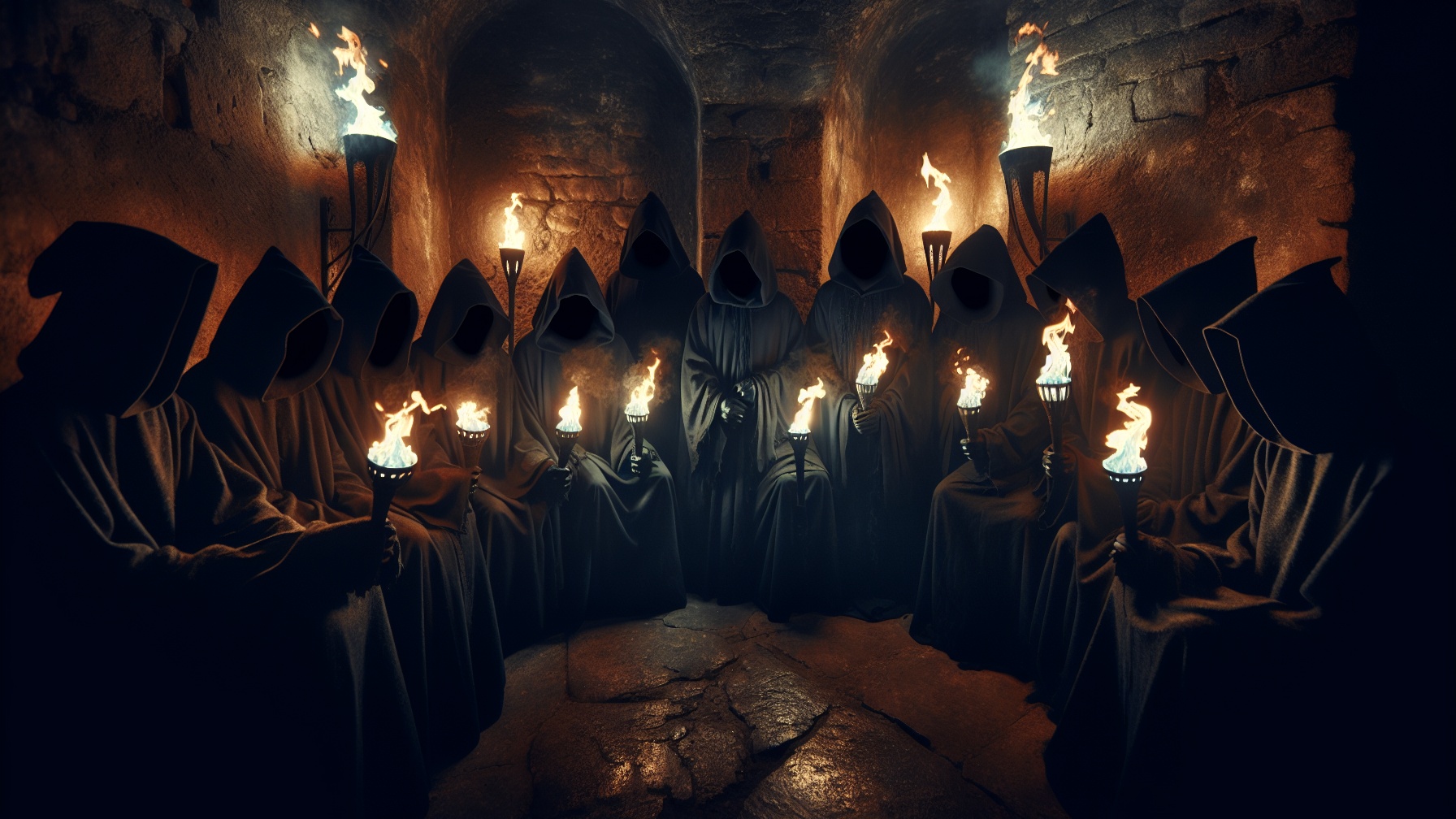
The Thule secret society was a bunch of German occultists who are believed to have exerted a strong influence on Nazi ideology. But did these sinister individuals really shape the policies of Adolf Hitler?
Nazis – the mainstream account of their rise
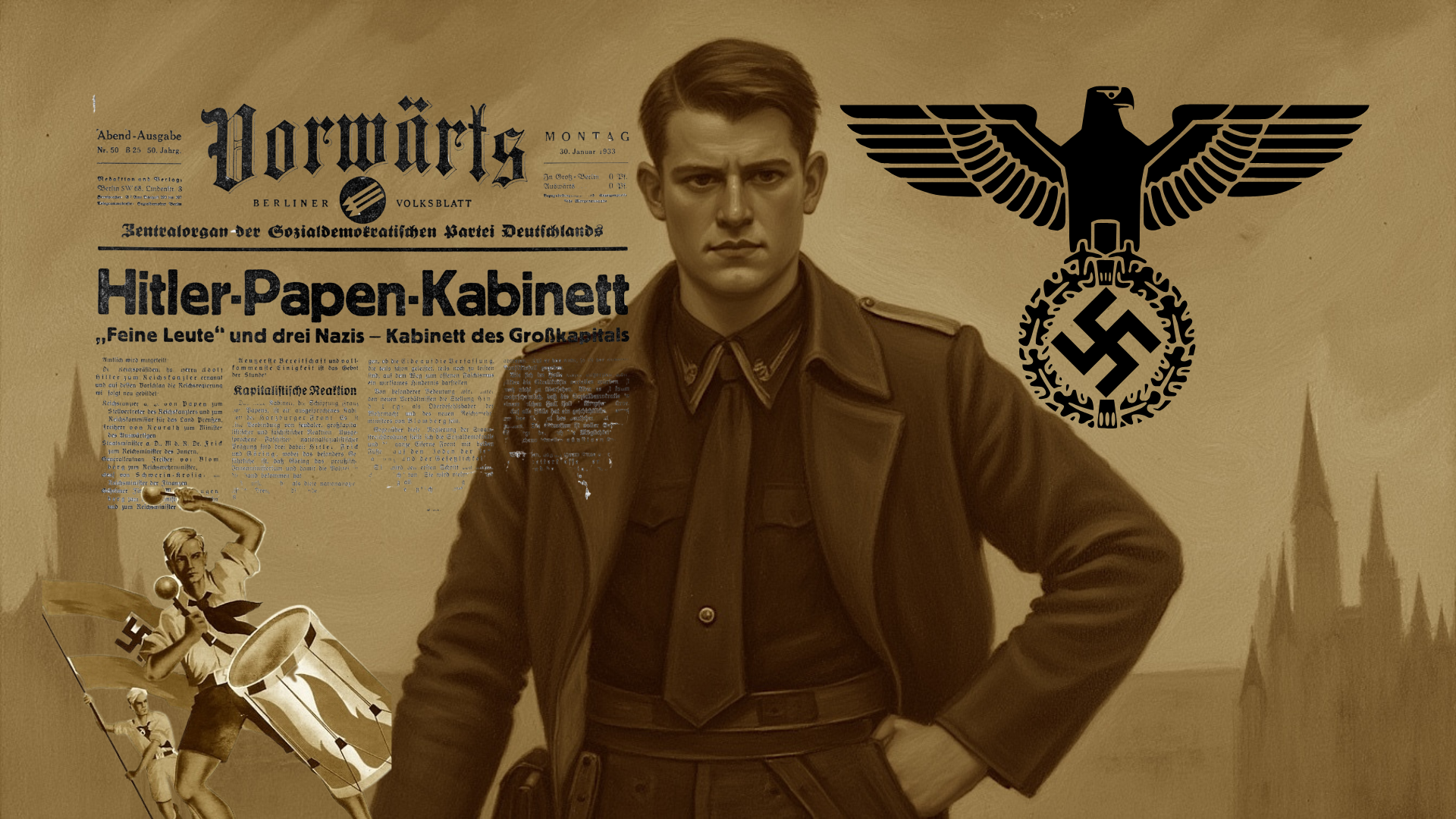
There are two ways of looking at the rise of the Nazis. On the one hand they achieved power for largely socio-economic and geopolitical reasons. Germany’s ruling class sacrificed liberal democracy and human rights to save capitalism from the threat of communism supporting a party, the Nazis, that militarised a section of the population and unleashed them on the political Left and trades unions.
The Jews were convenient scapegoats characterised as both rapacious capitalists and communist agitators. Hitler tapped into wounded nationalism in the wake of Germany’s defeat in World War One as well as the fear and fury provoked by the Wall Street crash and Great Depression.
Nazis – the occult secret society account of their rise
But since the 1960s, others have emphasised the occult roots of Nazism – with some inferring that Hitler bewitched the German people into supporting him. It’s undeniable that Hitler, and the SS chief Himmler, expended great effort trying to get hold of sacred and powerful artefacts. They also backed research and expeditions to try and prove the superiority of the Aryan race.
All of this was influenced by occult and supremacist secret societies that predated the Nazi party. One of these was the Thule society – or Thulegesellschaft in German. Whether or not the Nazis summoned up real demons should be left to horror movies and pulp fiction. Nevertheless – they did dabble in the occult.
The Thule secret society
Late Victorian Britain witnessed considerable interest in the supernatural and the occult. This mania for all things paranormal jumped to Europe in the early twentieth century gaining a strong following in Germany, especially the city of Munich. Unfortunately it mutated into something very poisonous. The Thule Society believed that the land of Ultima Thule, in the Arctic north, was the ancestral home of the Aryans. An Atlantis-like origin point for the so-called ‘master race’.
Living like a tramp on the streets of Vienna before the First World War, the young Hitler frequented certain bookstores where he imbibed these ideas. This mystic ideology combined a belief in the historic destiny of the Aryans with a deep hatred for the Jews. Thule pushed this messaging through its publications. The leader of this secret society was Baron Rudolf von Sebottendorf who used several aliases including that name. In truth, he was born Adam Alfred Rudolf Glauer. His main intellectual influences were Sufi mysticism, Freemasonry, the writings of the theosophist Madame Blavatsky, and a hodge-podge of other philosophies and mythologies.
In the first two decades of the twentieth century, several future leading Nazis were members of the Thule society. These included Rudolf Hess, Dietrich Eckart, and Alfred Rosenberg. They attempted to infiltrate and destroy the German Communist Party from within but when that didn’t work, they took over a tiny political organisation – the German Workers Party – and transformed it into the Nazi party.
Sebottendorf (or Glauer if you prefer) was a curious figure. He ‘accidentally’ betrayed several Thule society members to the short-lived Communist Soviet in Munich in 1919, resulting in their execution. This included the secretary of Thule, Countess Hella von Westarp (pictured below). She was apparently led into a courtyard by the red guards where she saw the bodies of six Thule members piled up and a firing squad waiting nearby. Terrified, she screamed: “Help me, let me live an hour longer, question me one more time, I am innocent”. She was shot moments later.

Sebottendorf had been initiated into Freemasonry in Istanbul around 1900 and, according to some accounts, was introduced to Rosicrucianism by a Turkish Jewish family, the Termudi. In 1910, he founded a lodge of the (Sufi) Bektashi order while still living in Istanbul. Once back in his native Germany, he set up the Thule Society and by 1919, had made contact with a discharged, angry, Austrian-born army corporal called Adolf Hitler.
But relations with Hitler and his new Nazi party were uneasy and Sebottendorf flitted in and out of Germany. From 1942 to 1945, he was a spy for the Germany military, back in Istanbul again, but suspected of being a double agent for the British. On May 8, 1945, he committed suicide by jumping into the Bosphorus.
1970s interest in the Thule secret society
By the 1970s – a decade that loved a good conspiracy theory – the idea that the Nazis had been propelled to power by dark mystical forces had taken hold. Several books and articles unearthed proof that members of Thule were responsible for the Nazi obsession with finding sacred artefacts like the Holy Grail. The SS chief, Heinrich Himmler, was especially exercised with the whole issue – sending teams of historians and archaeologists out to find the passion relics of Jesus Christ and the origins of the Aryans as far afield as Tibet.
It was even alleged by one professor that after the Second World War, the victorious Allies made a conscious decision to prosecute the Nazis, at the Nuremberg trials, as war criminals and not religious fanatics. Hard to believe that option was ever seriously considered.