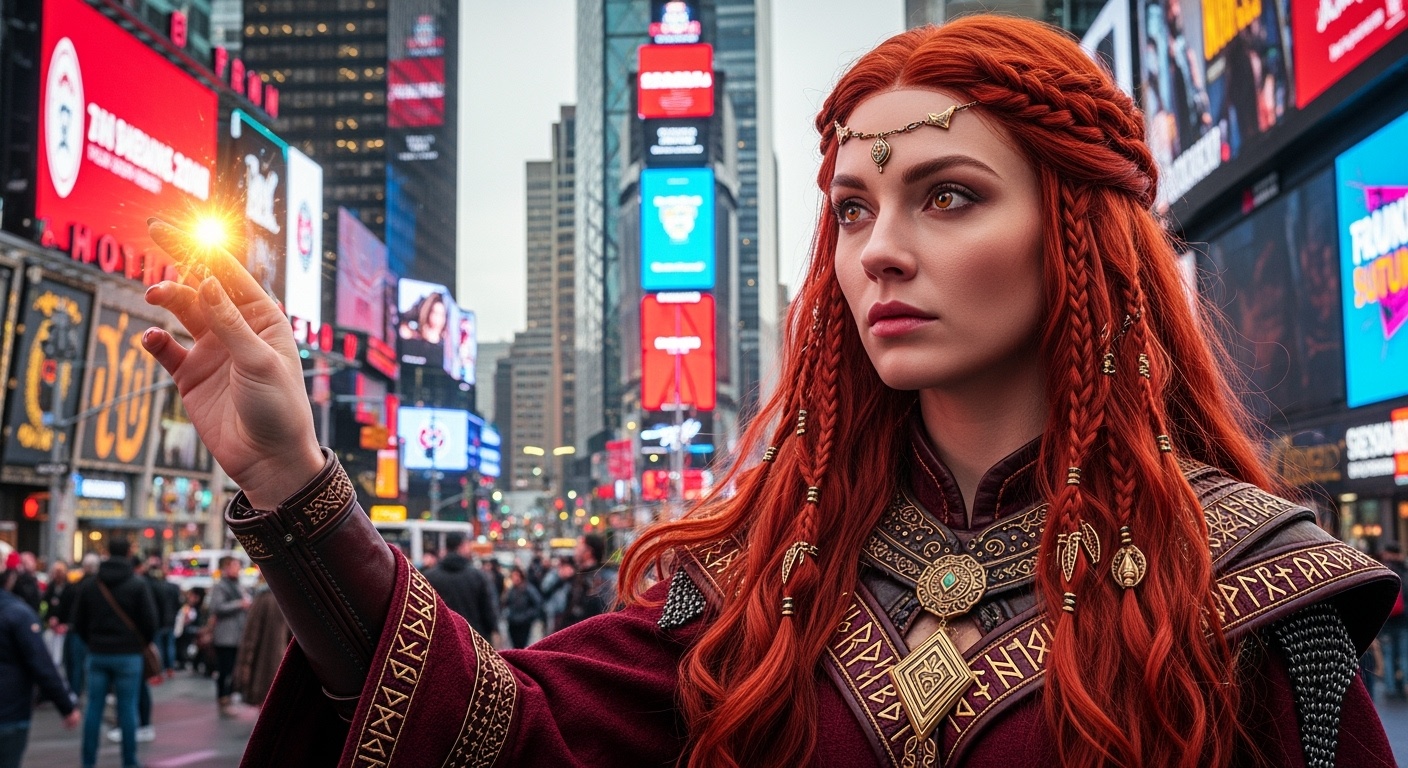
Not since the 1970s has there been so much interest in witchcraft. On social media, communities like #WitchTok are booming with young people engaging in the mysteries of folklore, paganism, Wicca, and sorcery. So, what exactly is the appeal of witchcraft?
Last week, I went to a screening of the 1973 movie The Wicker Man at a church near where I live – St Giles in Camberwell, south London. I’d seen the film countless times but the church was packed with young people. I was a Boomer sitting among Zoomers. Even the aisle was full of chairs and every pew occupied. Fascination with the occult hasn’t been this strong for years.
But it’s witchcraft I’m going to look at here. What does Gen-Z love about black magic and the supernatural? Here are my thoughts – feel free to share yours in the comments:
Witchcraft is seen as a religion of nature. Like the natural world, there is a female and male deity – the god and goddess – as opposed to a single, male God, as in the Abrahamic faiths: Judaism, Christianity, and Islam. Even though Catholicism gives a special place to the Virgin Mary, witchcraft empowers women as equal beings with rich personalities as opposed to an idealised virgin.
DISCOVER: Helen Duncan – the last witch in England
There is symbolism in witchcraft but not the esoteric and obscure symbolism of Christianity. Whereas Christians venerate a cross, lamb, or bleeding heart – Wicca looks to the moon, sun, stars, trees, and animals. It honours the goddess as maiden, mother, and crone. But these symbols are not enforced, as in Roman Catholicism, because witchcraft is essentially decentralised and less prescriptive.
Witchcraft can be seen as a way to connect with one’s inner power and take control of one’s life, which can be symbolised through personal talismans, rituals, and practices. There is no doubt that interest in the supernatural, and mysticism, increases in troubled times when people feel they have no real say in their future. Emerging from the Covid pandemic into a very volatile world where opportunities are diminishing, it’s not surprising that young people are seeking supernatural explanations and remedies.
Witchcraft is more active for those involved than the passive experience with Christianity. Typically, a Christian attends church and stands, kneels, and sits while a priest or minister leads from the front. The faithful are passive recipients of the word of God. But in witchcraft, you are at the centre of the action. For young people today, increasingly resentful and suspicious of official authority, this is incredibly appealing.
Unlike the Abrahamic religions – but very much in the tradition of pre-Christian, pagan beliefs – witchcraft doesn’t have commandments governing every aspect of your life. There are no Ten Commandments in Wicca. This belief in a high degree of individualism chimes with the zeitgeist. You could almost say it’s a bit neo-liberal in flavour. But most Zoomers wouldn’t thank me for saying that.
In witchcraft you don’t get the overbearing hierarchy of the Catholic church with the pope, cardinals, archbishops, bishops, etc. Instead, each coven of witches is overseen by a high priest, male or female, that represents the god and goddess. Those who get involved in a coven rise up through three degrees as their knowledge and powers increase. In sharp contrast with the Catholic church, men and women enjoy complete equality in the world of witchcraft.
There is a long history of persecution of witches – especially from the 15th century onwards – that has created a legion of martyrs. All those people, mainly women, burned at the stake or hanged for being a witch has only served to redouble the conviction of those involved in witchcraft today. If it wasn’t so powerful, the church wouldn’t have expended so much energy seeking to destroy witchcraft.
Modern witchcraft tends to distinguish between real witches and pseudo-witches. The latter are usually Satanists fixated on the darker side of magic. Real witches prefer to emphasise the good they do in the community and their powers to heal and help the afflicted. As for committing acts of evil, witchcraft teaches that if you cause harm in this life, it will rebound on you threefold – while you are still alive. So, there is a strong incentive to do good. That’s a far cry from the stereotype of a wicked, cackling sorceress on her broomstick.
If you would like to know more about the Knights Templar, then get your hands on a copy of my book: The Knights Templar – History & Mystery. Published by Pen & Sword and available on Amazon, Waterstones, Barnes & Noble, and WHSmith. Don’t miss out on your copy!