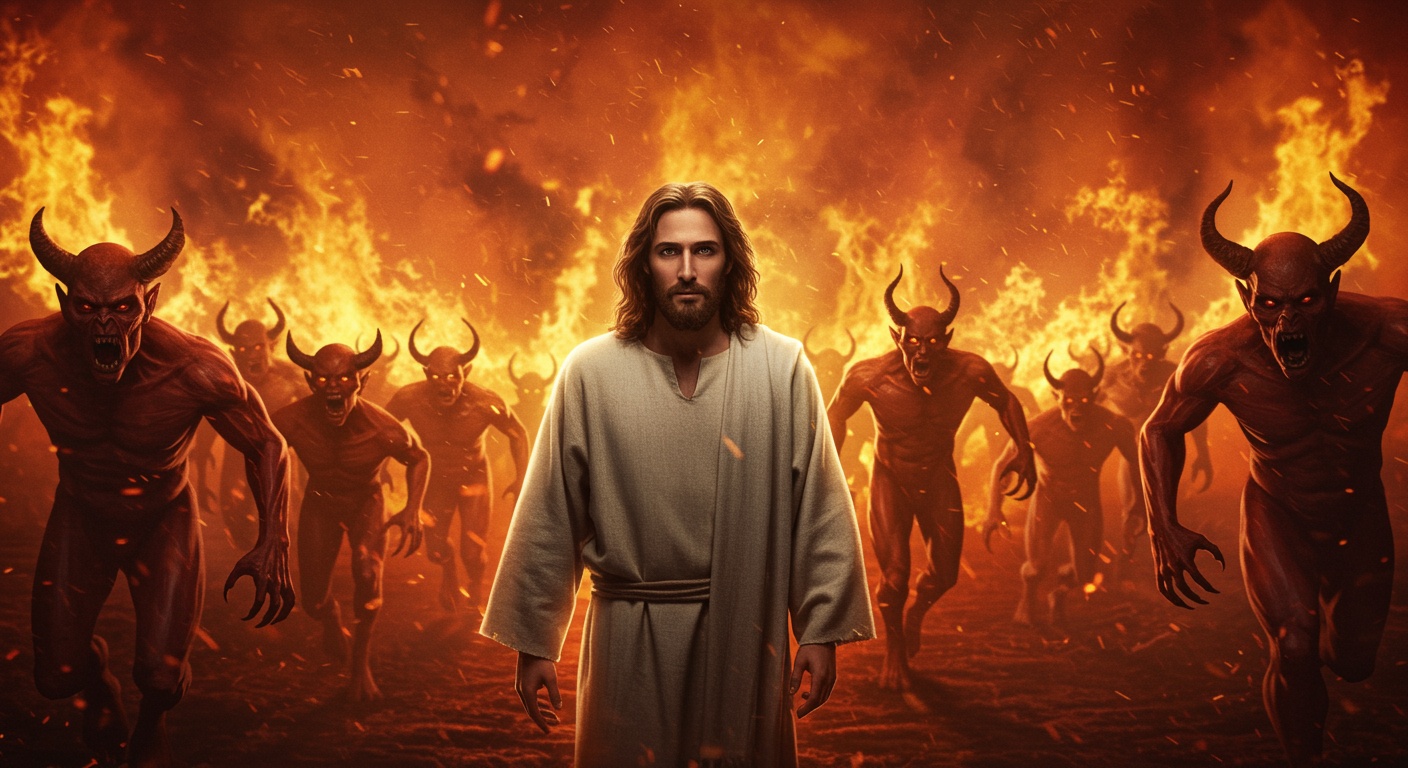
You all know that on Good Friday, Jesus Christ was crucified. And on Easter Sunday, he rose from the dead. But what happened on Saturday? In the Middle Ages, it was believed that Jesus, having died on the Cross, descended into hell to save the righteous who had died before his death – which was intended to save humanity (provided you didn’t sin). So, let’s take a look at one aspect of Easter you may never have heard of before: The Harrowing of Hell.
The harrowing of hell is seen as a visual representation of Jesus’ victory over death, sin, and the power of Satan. The primary belief is that Jesus freed the souls of Old Testament prophets, patriarchs, and other righteous people who had died before his incarnation. The descent into hell is not seen as Jesus experiencing punishment, but rather as a triumph over the forces of evil and a demonstration of his power.
It’s an unusual visual image though. Jesus walking through the fiery torment of hellfire. How did he negotiate his way past all those demons and souls rightly condemned to eternal torment? And remember that hell is run by a renegade angel – Lucifer – who was once the favoured son of God. All very awkward.
DISCOVER: How to summon up the Devil
And where in the bible do we read a description of the so-called “harrowing of hell”? Of course, the answer is nowhere. This is a story found in the second part of the Gospel of Nicodemus, describes Jesus’ descent into Hades to liberate the righteous souls who had been waiting for him. The Gospel of Nicodemus narrates how Jesus descends into Hades and leads out the souls of the Old Testament patriarchs, including Adam, Eve, and other notable figures, signifying the universal redemption offered by Jesus.
The Gospel of Nicodemus, also known as the Acts of Pilate, is believed to have evolved over time, with different versions and additions, and dates to some point before 200 CE. These “apocryphal” gospels were not included in the New Testament because they contained elements that contradicted early church teaching. Nevertheless, they didn’t disappear. And intriguingly, were well known right into the Middle Ages.
So, in between Good Friday and Easter Sunday, spare a thought for the Messiah and his walk through hell.