


Opus Dei is a notorious secret society that wields considerable power and influence in the Roman Catholic church and wider society. So, what exactly is Opus Dei and does it pose any kind of threat?
The founding of Opus Dei – the secret society
Opus Dei was founded by Josemaría Escrivá de Balaguer y Albás (1902-1975), usually known by just his first two names. He claimed to have experienced a vision from God on October 2, 1928, in which the creator of the universe informed him that people could serve the church without giving up their day jobs, family commitments, and friends.
These kinds of movements had existed, in different forms, throughout the history of the church – sometimes tolerated and other times suppressed by the popes. Escrivá was lucky to push the idea at the right time and his ultra-conservative politics plugged him into the rising tide of fascism and authoritarianism in Spain, Portugal, and Italy. But especially Spain.
The church had been spooked by the rise of anti-clericalism in the late 19th century but even worse, the victory of communism in Russia after 1917. During the Spanish Civil War of the 1930s, anarchist and communist groups had taken aim at the Catholic church as a bulwark of reactionary belief and practice. So the victory of General Franco’s fascists was broadly welcomed. Opus Dei supplied a stream of technocrats for his regime over the decades.
None of this was opposed in Rome. For the Vatican, there was an existential war against atheistic Bolshevism to be waged and Opus Dei had obvious appeal. A clandestine secret society, made up of priests and lay people, that could worm its way into the highest echelons of secular society.
Self-mortification – whips and spiky chains
One of the most famous aspects of Opus Dei is its use of whips and chains to achieve religious ecstasy. The order denies that this is widespread. But Escrivá was well known for beating himself to the point where his blood streaked the walls and ceilings.
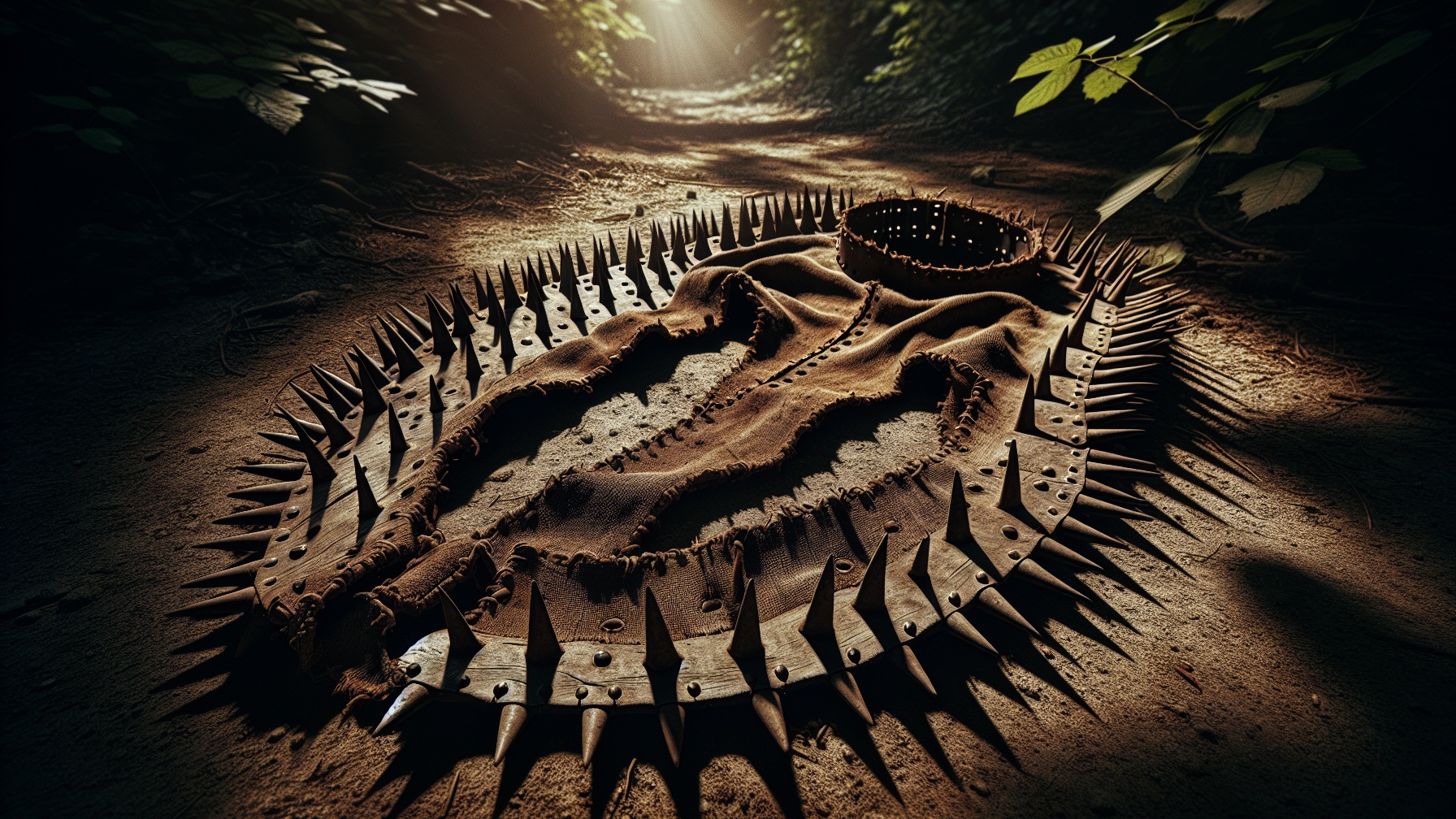
Ex-members have described a five-thonged whip known as “The Discipline” and a spiky chain that is bound tightly to the thigh to deliberately draw blood. This implement featured in the book and movie, The Da Vinci Code, where you see the Opus Dei “monk” Silas torturing himself. The spiky chain is often referred to as a “cilice”.

Self-abuse has always been a hallmark of certain parts of the Roman Catholic church. Saint Augustine and Saint Benedict both leaped naked into thorny bushes when temptation roused their flesh. I saw a depiction of Benedict rolling in a thorny bush this year at a monastery in northern Portugal.
There were also movements of flagellants in the Middle Ages that processed while whipping themselves through the streets to emulate the final sufferings of Jesus Christ. This activity tended to become more common during crises like plagues or famines. Opus Dei, though, is the only branch of the church engaging regularly in this kind of self-mortification today.
When asked in 2002 by a British journalist, working for the Daily Telegraph and based in the Spanish capital, Madrid, about the use of torture in the organisation, an Opus Dei representative drew a weird comparison with dieting: “Do you like pretty women? So do I. Do you know what effort they make to get a nice figure, and increase their height with high heels – this is a very hard mortification, much more than a ‘cilicio’.”
Many pretty women might beg to differ.
Allegations of brainwashing
Some of those who had left Opus Dei claimed in 1981 that it combined the horrors of the Middle Ages with George Orwell’s dystopian novel, 1984. There were allegations of brainwashing in this secret society that involved being separated from friends and wider society.
Books could not be read or movies watched without prior permission. Holidays were forbidden. And recruits were often lonely or depressed people down on their luck who were then “love bombed” by Opus Dei members.

In 1981, there were reports that the Roman Catholic church in England and Wales was set to investigate the activities of Opus Dei after reports of brainwashing. But the secret society had a friend in the Vatican: the pope. Unlike Paul VI who led the church in the 1960s and 1970s, a new Polish pope – who despised Soviet communism – looked very favourably on the order.
Vatican shielding of Opus Dei
Liberals within the Catholic church have always intensely disliked Opus Dei but under the papacy of John Paul II (1920-2005), this secret society could do nothing wrong. In 1982, he made Opus Dei the church’s only “personal prelature” – basically a diocese without borders. Ten years later, the same pope beatified Escrivá in front of a monster crowd at St Peter’s square in Rome estimated at about 300,000. And another decade later, John Paul II declared Escrivá a saint.
The canonisation process was highly contentious as two of the physicians involved in authenticating miracles (ie cancer cures), attributable to Escrivá’s divine intervention from beyond the grave, were – surprise, surprise – members of Opus Dei. The influence of Opus Dei in the Vatican went right to the top with one of the Holy See’s most seasoned operators – Joaquín Navarro-Valls (1936-2017) – not only being an Opus Dei lay member (taking the optional vow of celibacy), but having lived in the same house with the founder, Escrivá, back in the 1970s. Navarro-Valls was in charge of Vatican media relations – effectively the spokesman for the pope.
In 1994, Javier Echevarría Rodríguez became the head of Opus Dei. Then a year later, John Paul II consecrated him as a bishop – the ceremony pictured below.

In 2001, Jose Gomez became the first Opus Dei priest to be ordained a bishop in the United States.
FIND OUT MORE: Skull and Bones – the Yale secret society
Opus Dei and Soviet spying: the Robert Hanssen scandal
In 2001, Opus Dei hit the headlines when an FBI agent, Robert Hanssen, was arrested over what was described as “the worst intelligence disaster in US history”. Just three years after joining the FBI, Hanssen began spying for the Soviet Union. He sold thousands of documents about the American nuclear program and its global spy networks to the Soviet spy agency, the KGB.
In 1968, Hanssen converted from Lutheranism to Catholicism and then joined Opus Dei, sending his children to one of their schools. He attended mass every morning at 6.30am and apparently even confessed his espionage activities in the confessional box – racked with remorse as the Soviet Union was an atheist state. But the money overwhelmed his reservations. There is no suggestion that Opus Dei endorsed his spying for the Kremlin – but his membership raised eyebrows at the time.
As if that wasn’t bad enough, in the same year – 2001 – it was revealed that one of the FBI director’s children attended an Opus Dei school.
Opus Dei still causes uproar
In 2005, the British Prime Minister, Tony Blair, appointed an education minister, provoking uproar within his own party. She was a member of Opus Dei and some backbench members of parliament felt it was inappropriate for somebody in that secret society to hold such a position. They cited the association of Opus Dei with the fascist dictatorship of General Franco in Spain from the 1930s onwards.
DISCOVER: Five biggest history conspiracy theories!


Can you tell me how to access the news articles you posted pls? I am suing Opus Dei and RC bishops and they could be useful. Thanks