I grew up in Essex – a county often mocked and reviled. But for those of us who know it well – it’s a part of England rich in history, stories, and mysteries. If you want to step back into the Roman Empire, the era of the Vikings, Saxons, and Normans or understand the life of the Knights Templar, then Essex has plenty of answers. It’s also a county where witches and devils have a long and wicked history.
Where to start? Why not with an Essex bloke who thought he could sniff out witches!
In 1645, the notorious self-appointed Witchfinder-General Matthew Hopkins, born in the north Essex town of Manningtree, held a high profile witch trial in the Essex market town of Chelmsford. Hopkins was a mediocre lawyer who tapped into the growing appetite for burning witches that gripped Europe at that time. Like many Essex people (I’ll include myself here) he craved fame and soon got what he wanted.
Go to Chelmsford today and it’s a pleasant enough shopping experience. But return to the mid-17th century and this part of the county was ablaze with rumours of sorcery and diabolism. Hopkins and his associate, John Stearne, had whipped up a frenzy around allegations of witchery. Women who consorted with Satan and various demons to cause mischief, pain, and even death.
Consulting his own manual – The Discovery of Witches – Hopkins preached that he could distinguish the guilty from the innocent. Some unpleasant torture – physical and psychological – was involved, needless to say. About 23 women were accused in Chelmsford, and an estimated 19 were hanged. Four others died in prison. The hysteria foreshadowed what would happen decades later in Salem – a town in the British-ruled American colony of Massachusetts – that witnessed an especially brutal witch trial. Hopkins, then, was truly a trailblazer.
There are some incredible estimates about the number of so-called witches burned in Essex, especially during the puritanical Commonwealth of Oliver Cromwell. One figure I find hard to believe is that 3,000 women in Essex were consigned to the flames between 1648 and 1660. I suspect that is a figure for the entire country. However, the fervour of Essex people for witch hunting was noted.
There was an intense religiosity among these God fearing folk to the north of London. Rural, bible clutching supporters of the new Protestant faith and deeply suspicious of heretics, magicians, and healers in their midst.
About 80 years before Hopkins embarked on his witch purges, the town of Great Dunmow had witnessed a well reported trial. In 1567, Alice Prestmary was charged with bewitching Edward Parker. At the Brentwood Assizes, in March of that year, she was found guilty. However, before she could be hanged or burned at the stake, Alice died of “gaol fever”, which was more than likely typhoid. Her husband, John, had already hanged himself a few weeks earlier, after his wife’s arrest.
FIND OUT MORE: Matthew Hopkins – the Witchfinder General
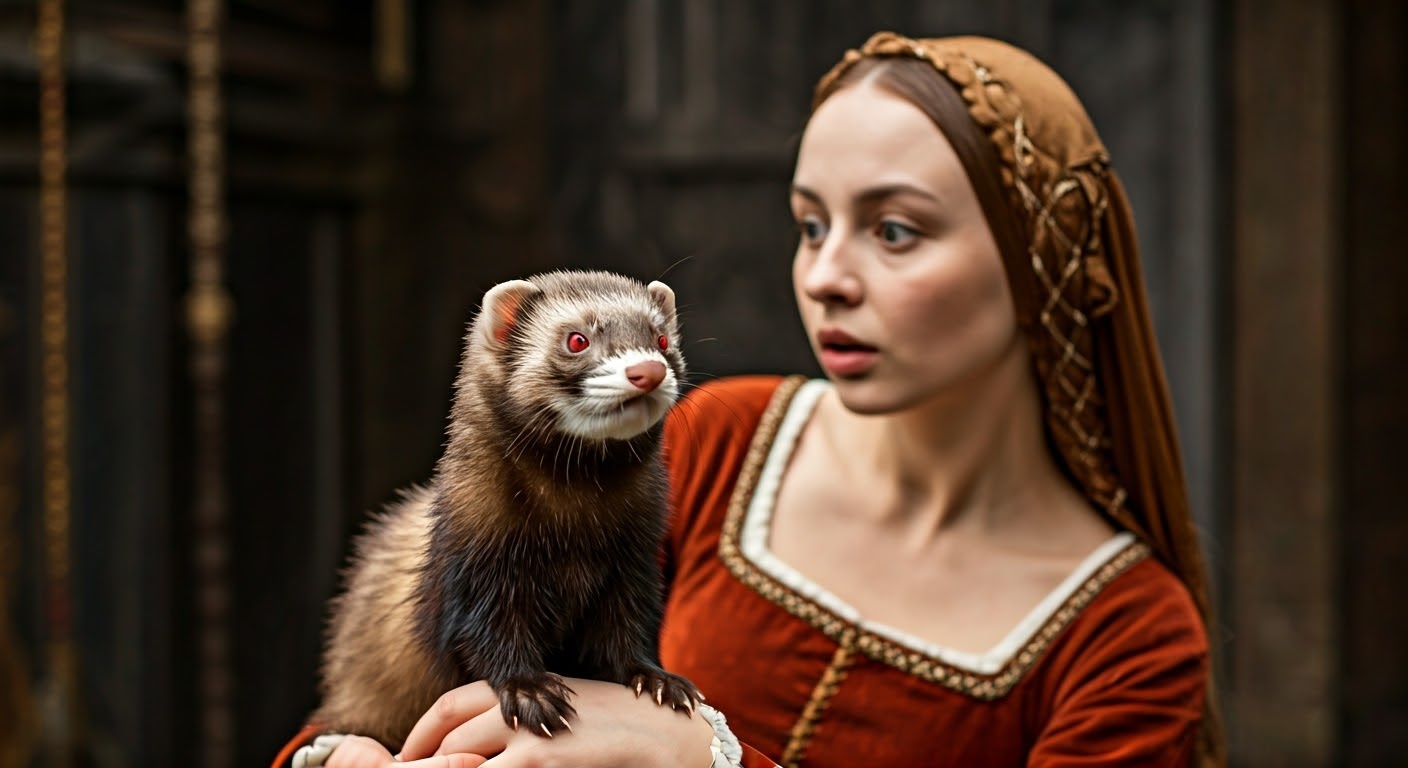
In 1589, Joan Prentice (somebody spelt Prentis) was hanged alongside two other women called Joan – Joan Cunny and Joan Upney – in Chelmsford. Joan Prentice lived in poverty in the village of Sible Hedingham, near the town of Braintree. With the benefit of hindsight, it was probably inadvisable to have a pet ferret called Satan, because that was used in evidence during her witch trial. The ferret was allowed to bite her cheek and draw blood as illustrated below in a depiction of the grisly execution.

During the trial, it was claimed that Satan, lord of darkness, had acted through the ferret to claim Joan’s mortal soul. The exact description of this event is so staggeringly weird that I feel constrained to share. This is the actual testimony from the trial:
…that about six years past, between the feasts of All Saints and the birth of our Lord God, the Devil appeared unto her in the almshouse aforesaid about ten of the clock in the night time, being in the shape and proportion of a dunnish coloured ferret, having fiery eyes; and the said examinate being alone in her chamber, and sitting upon a low stool preparing herself to bedward, the ferret standing with his hinder legs upon the ground and his forelegs settled upon her lap, and settling his hinder legs upon the ground and his forelegs settled upon her lap, and settling his fiery eyes upon her eyes, spake and pronounced unto her these words following, namely: “JOAN PRENTICE, give me thy soul.”
This account of a fiendish, talking ferret was enough to secure a death sentence for Joan Prentice.
Essex loves a witchcraft trial
Witchcraft cases endured in Essex, long after the rest of the country had embraced science and rationalism. Sible Hedingham, mentioned above, saw one of the saddest examples of witch hunting mania as late as 1863. A local deaf and mute man, known rather insultingly as “Dummy”, tried to make a living by fortune telling.
DISCOVER: Helen Duncan – last witch in England
Emma Smith, from the neighbouring village of Ridgewell, accused him of cursing her. While he was drinking in a pub one evening, a mob descended and beat him severely, then threw the defenceless man into the mill stream as a form of “trial by ordeal”. He survived and was taken to a workhouse, where he later died of pneumonia. Those involved were arraigned before the Chelmsford Assizes where they received sentences of six months’ hard labour. During the trial, the accused made the unfounded statement that Dummy was French!
I do like the fact that in the newspaper report the point is made that superstition is no excuse for barbarism (more below).

The case of Dummy was not the last example of witch dunking. Step forward Essex for that dubious honour! The year is 1880 and the town of Dunmow sees Charles and Peter Brewster, father and son, taken to the local assizes (court) by Susan Sharpe, a resident of the Essex village of High Easter. They claimed that she had used magic to kill their domestic pets, make their bed rock unnaturally (think The Exorcist and you’re close), and cast her own shadow on the walls of their house.
The Brewsters were bound over to keep the peace but you’ll be glad to know I managed to locate a newspaper report from that week in 1880 in the Essex Newsman-Herald for June 16, 1880. Read the trial report below.