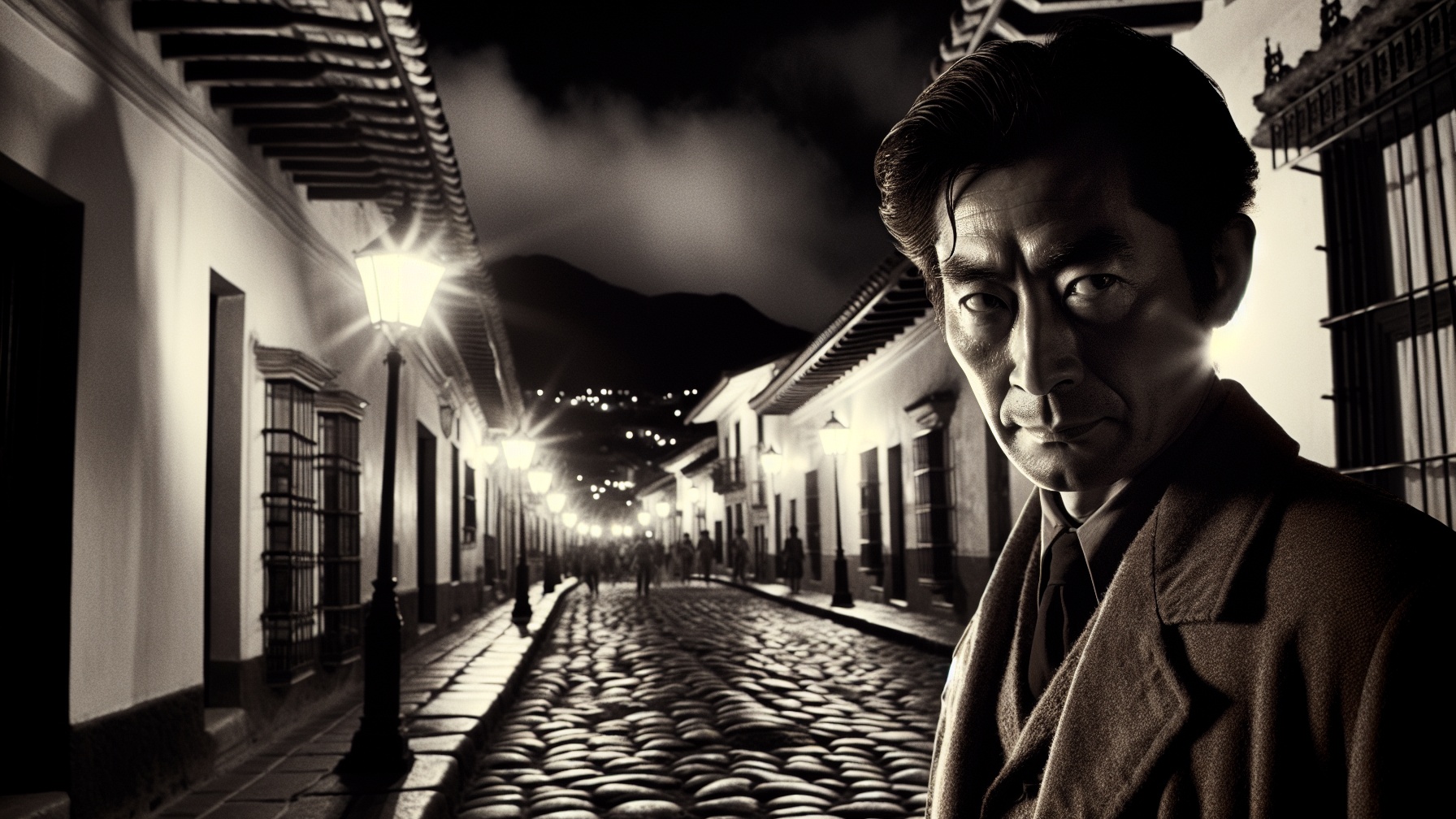
At the end of the Second World War, a wave of terror and assassinations among Brazil’s 300,000-strong Japanese community was blamed on a secret society: the Black Dragon. The war had ended with two atomic bombs dropped by the Americans on the Japanese cities of Hiroshima and Nagasaki forcing Japan to surrender. But the Black Dragon was refusing to accept this defeat. Newspapers claimed the society was attacking anybody who dared to suggest that Japan had lost the war.
Murders in the Japanese community in Brazil
Japanese people in Brazil reportedly went around declaring that their homeland had won the war. Some knew this was rubbish while others believed it wholeheartedly. If anybody dared to declare that Japan had been defeated, they could expect an unwelcome encounter with the Black Dragon.
On April 1, 1945, police were called to a house in the upmarket suburb of Jabaquara in the city of São Paulo. Neighbours had heard a shower of gunshots. When the cops went inside, they found the body of a well known Japanese journalist. This was followed by the attempted assassination of the former Japanese ambassador, Dr Shigetsumara Furuya when a volley of gunfire smashed a window at his residence but failed to hit him. Somebody or something was out to murder members of the Japanese community in Brazil.
But why?
Who were the Japanese in Brazil?
Let’s establish why there was such a large Japanese presence in Brazil. From the early years of the twentieth century, Brazil became a top destination for land workers in Japan who had lost their jobs due to increased mechanisation of agriculture and recurrent famines. The Japanese government encouraged this emigration to relieve social tension. Many went to work on Brazil’s coffee plantations. Despite some racism, they thrived and grew. But one unwelcome import from their homeland was an ultra-nationalist secret society – the Black Dragon.
The Black Dragon was both a political organisation and terrorist gang founded at the turn of the twentieth century. They were used as an informal auxiliary force by the Japanese armed forces to undertake dirty war tactics, assassinations, espionage, and sabotage against the country’s enemies.
Another target for their violence were liberals, left-wingers, and anybody opposing the imperial Japanese ruling order. During the Second World War, Japan sided with Nazi Germany and fascist Italy forming the Axis. When the Axis Powers were defeated by the Allies (United States, Britain, France, etc), the Americans occupied Japan and banned the Black Dragon. But the secret society’s members simply disappeared underground. And they attempted to continue their activities among overseas Japanese communities such as Brazil.
Black Dragon – the secret society strikes terror in Brazil
As a result of the terror campaign in Brazil, one newspaper report claimed that “tens of thousands” of Japanese there earnestly believed that the American general Douglas MacArthur had not received the surrender of Japan but had surrendered to Japan – and that Japanese forces were now in control of Washington DC!!! There was a doctored photo showing Winston Churchill and President Franklin Roosevelt in Tokyo abasing themselves before the emperor.
None of this was believed by educated, urban, middle class Japanese in Brazil but was swallowed by plantation workers in isolated villages. Many even thought that a large Japanese warship was on the way to take them to India – now apparently liberated from Britain – where they would become rich landlords. When anybody questioned this nonsense, they received a visit from members of the Black Dragon who promptly shot them.
Brazilian police interrogated suspected terrorists and discovered that the secret society was operating through a number of front organisations with respectable titles. For example the Patriotic Association for Unity of Thought and the all-female Association for the Purification of Japanese Ladies in Brazil. But hidden out of view were groups like The Suicide League, the League of Executioners, and The League for Upholding the Emperor’s Divine Right. The leader of the Suicide Youth League was revealed to be a previously trusted community adviser to the São Paulo police department.
In 1948 and 1949, Japanese land workers in Brazil were still reported to believe the Allies had surrendered to Japan. This was most prevalent among those who did not speak or read Portuguese and so could not read the local Brazilian newspapers – where Japan’s surrender had been covered comprehensively. Black Dragon was still distributing photographic images falsely depicting an Allied surrender to the Japanese emperor.
Racism?
When covering a story like this, it’s important to consider the role of racism. Japanese immigrants to Brazil did come up against racist attitudes and even in broadsheet newspaper articles from the 1940s, you can find the kind of language that would be condemned outright today. Brazil had a policy in the nineteenth and early twentieth century of encouraging white immigration. But it could not find enough cheap labour for its plantations. Japan – then a much poorer country – proved to be the answer. But the new arrivals were not wholeheartedly welcomed. And there were “yellow peril” scare stories.
A nuanced and subtly deductive approach is needed. Some Japanese in Brazil were supporters of the Black Dragon secret society but not all Japanese. In the same way that some Italian Americans joined anarchist groups in the United States at the turn of the twentieth century but most Italian Americans did not. However, there was a strong Italian presence within the global anarchist movement.
Similarly, the Black Dragon was an undeniable presence within Japan and in the Japanese diaspora. And it does appear to have focused on the Japanese community in Brazil just as its power base in Japan was shattered by the Allies. Nevertheless, it’s still important to avoid clumsy racial stereotyping and race baiting when covering this story.